
Two-wheeler architecture and test bench
Wire, test and integrate a two-wheeler system, then retrofit a real motorcycle.
The significance of this zone.
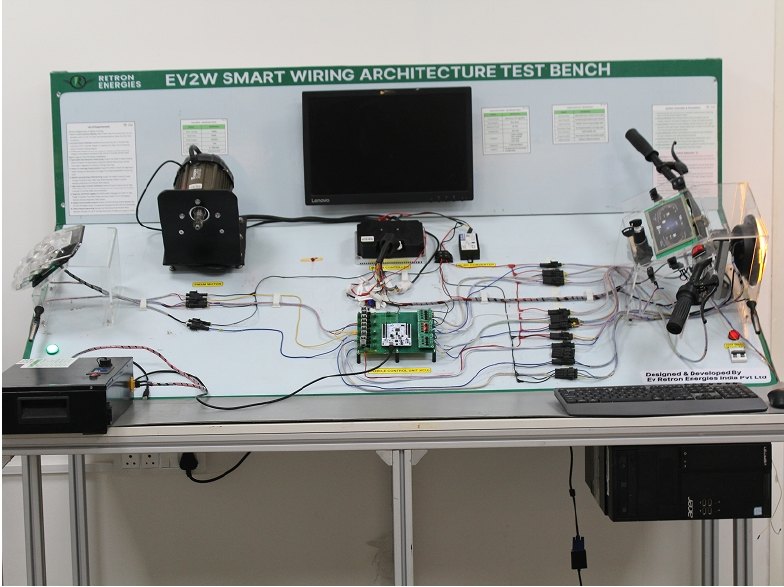
This zone is where everything comes together. Students build and test wiring harnesses, integrate the battery, controller, motor and controls on a smart wiring test bench, and then take on a motorcycle retrofit.
The focus is vehicle electrical and electronic architecture, not styling or body design.
Build a wiring harness from real connectors
Test continuity, insulation and signal integrity
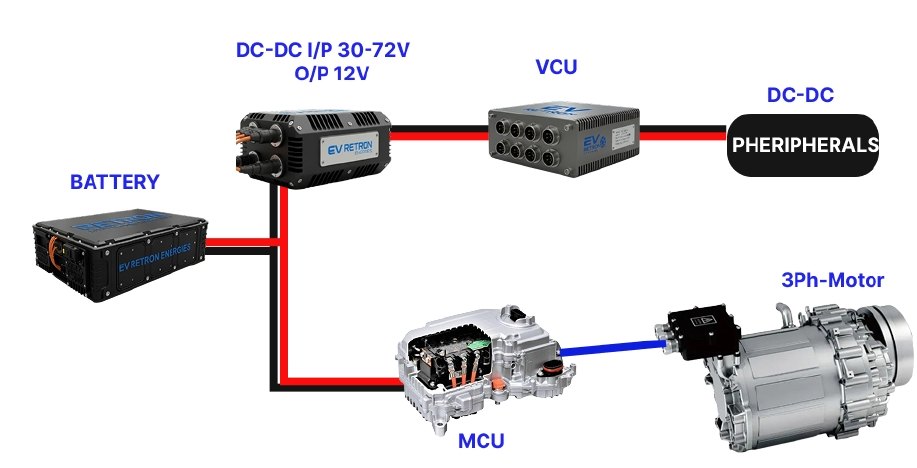
Integrate battery, controller, motor and VCU on a bench
Convert a petrol motorcycle to electric in the capstone
What students can run here.
Electrical testing
- Continuity test, pin to pin
- Short-circuit and isolation test
- Insulation resistance test at 500 to 1000 V DC
- High-potential (hipot) insulation test
Performance testing
- Voltage drop under load
- Connector mating and contact resistance
- Polarity and wiring orientation
- Functional power-on test
- CAN and LIN signal integrity
Reliability testing
- Over-current protection: fuse and BMS
- Strain relief and vibration check
- Hot and cold temperature cycling
- Environmental and IP rating check
- Documentation check: labels, part numbers, test reports
Motorcycle retrofit capstone
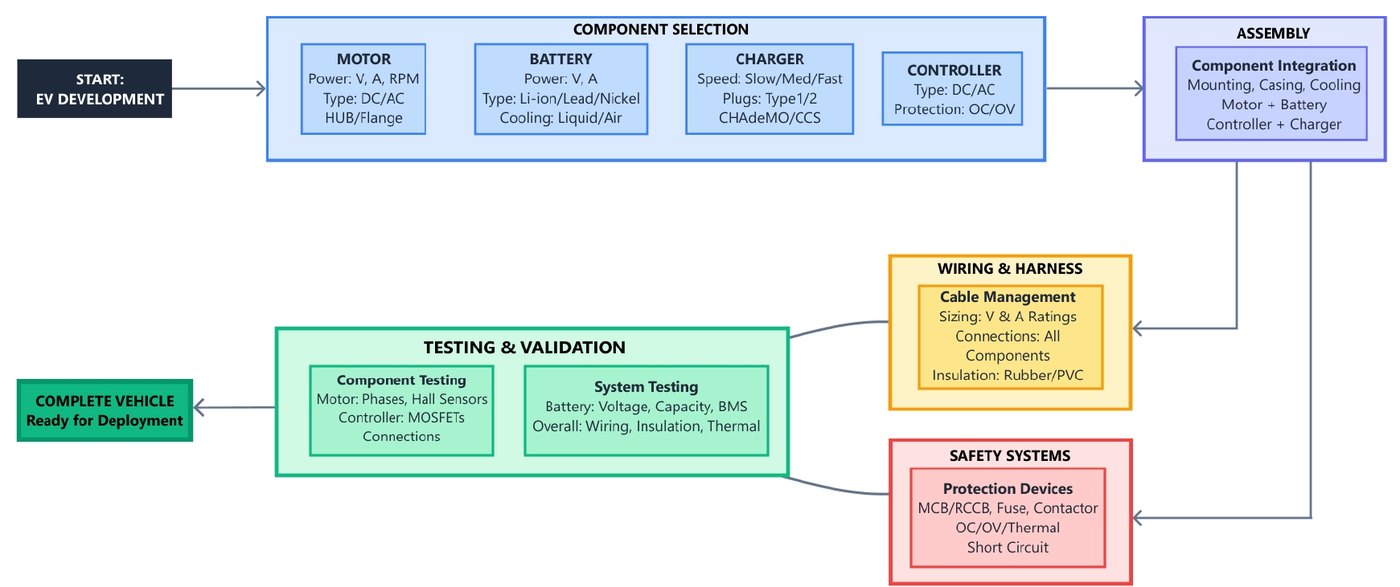
- Foundation: powertrain basics, wiring diagrams, electrical safety
- Integration: select motor, battery and controller; disassemble and mount
- Assembly: controller, throttle, safety systems, charging, fault finding
- Validation: system tests, range testing, documentation
Equipment and setup.
Equipment available
- EV2W smart wiring architecture test bench (table-top or wall-mounted)
- Battery pack, DC-DC converter and VCU
- Motor controller, motor, throttle and brake sensors
- Connectors, crimping tools and cable organisers
- Insulation tester and multimeters
- Safety equipment: fuses, breakers, protection devices
- Reference vehicle for retrofit
Software
- Test reports and documentation templates
Models and specifications are listed in your proposal.
How students move through it.
Learners start on the LMS and the AI simulator, then run the experiments on the bench.
Indicative curriculum. The final module list is confirmed in your lab proposal.Prerequisites
- Complete at least the battery, BMS and powertrain safety modules (recommended)
- Basic electrical knowledge helps
- Retrofit capstone suits students who have worked in the other zones
- FoundationICE versus electric, components, wiring diagrams, safety.
- Harness design and buildLayouts, crimping and routing.
- Electrical testingContinuity, isolation, insulation, hipot.
- Performance and reliabilityVoltage drop, signals, vibration, temperature.
- Bench integrationBattery, BMS, controller, motor, VCU.
- Retrofit assemblyDisassemble, mount, wire and assemble.
- ValidationSystem tests, range test, documentation.
What learners can do afterwards.
For institutions and for industry.
Colleges and training institutes
- A capstone that joins every other zone
- Job-ready projects students can show
- Fits electrical, electronics and mechanical departments
Startups, SMEs and OEM teams
- Validate subsystem integration before a prototype
- Build and test harness layouts
- Train staff on EV electrical architecture
- Prove a conversion on a real vehicle
Ask about the two-wheeler architecture and test bench zone.
Tell us about your institution or project. We reply with the zone details, equipment list and a proposal.