
Battery management system (BMS)
Test real BMS hardware against an emulated pack, safely.
Enquire about this zone See the experiments
The pack emulator is patent pending.
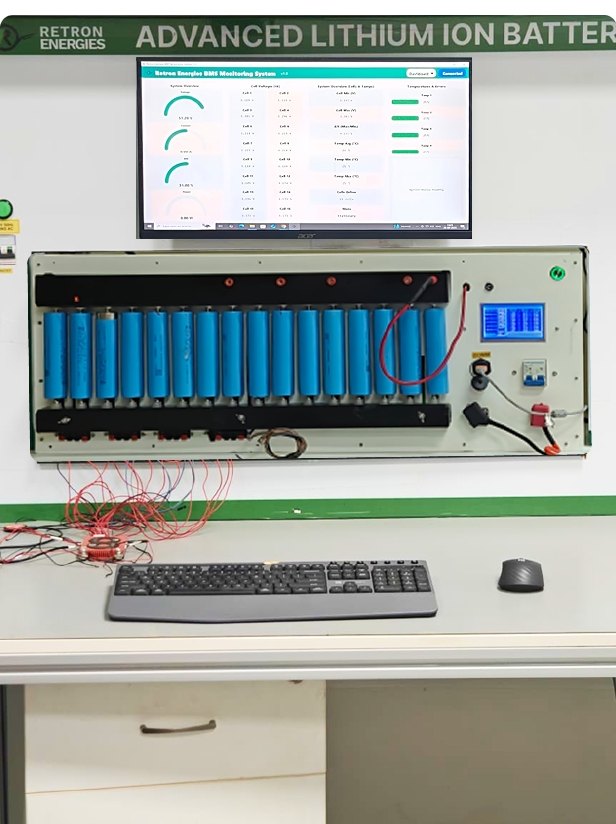
The significance of this zone.
The BMS is the battery's brain and its safety guard. Testing one on a live high-energy pack is risky. This zone lets students test real BMS hardware against an emulated pack, so protection limits can be pushed without fire or high-voltage risk.
The kit covers packs from 8 to 16 cells in series, which spans small scooters to larger vehicles and energy storage.
Emulate 8S to 16S packs without a live battery
Work with LFP, NMC and NCA chemistries
Trigger protections and watch the BMS respond
Compare the BMS's state-of-charge reading with measured data
What students can run here.
Pack emulation
- Build 8S to 16S pack configurations
- Run a real BMS on an emulated pack, with DC-isolated output
- Qualify cells with IR and OCV tests first
Protection tests
- Cell and pack over-voltage and under-voltage, with hysteresis
- Charge and discharge over-current and short-circuit response
- Thermal cut-off with multiple temperature sensors
Balancing and algorithms
- Measure passive and active balancing
- Check SOC and SOH estimates against real measurements
Monitoring and logging
- Live voltage, current, SOC and temperature dashboard
- Cell-level view of up to 16 cells
- Data logging with CSV export
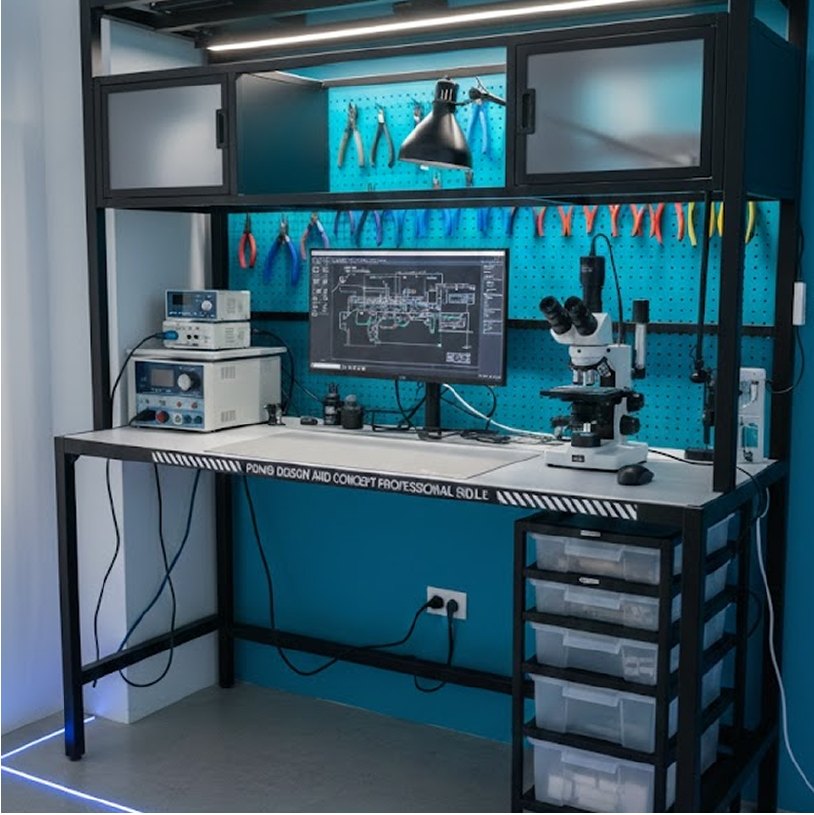
BMS repair workbench
- Surface-mount soldering and desoldering
- Find faults in balance circuits, current sensors and MOSFETs
- Inspect solder joints under a microscope
- Static-safe handling (ESD) of sensitive parts
Equipment and setup.
Equipment available
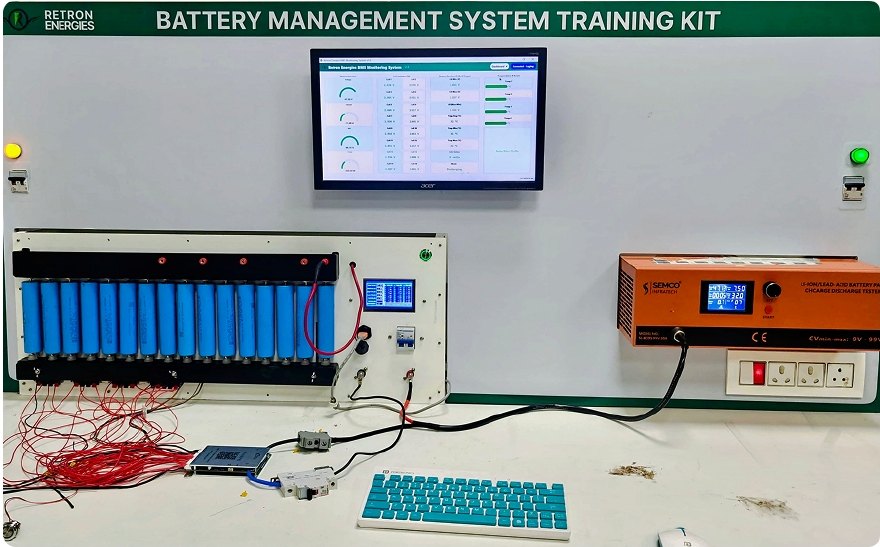
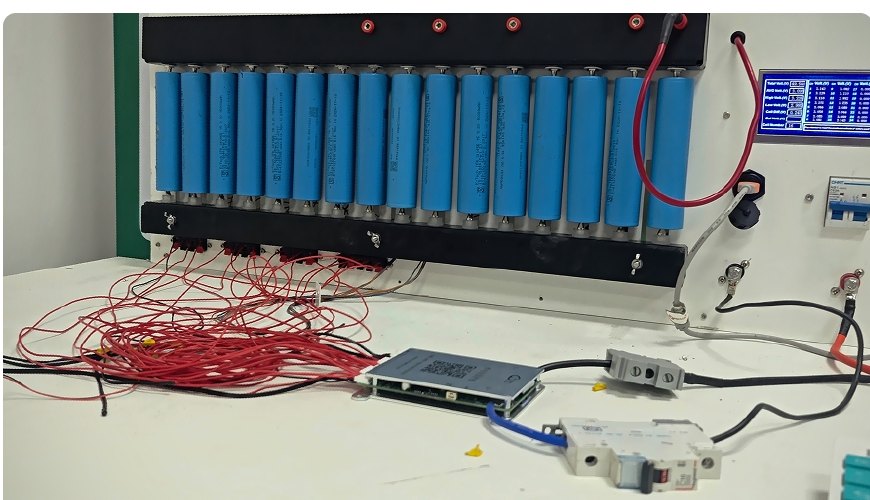
- Battery pack emulator, 8S to 16S (patent pending)
- BMS under test, standard and smart
- Charge-discharge cycler (0 to 99 V, 20 A)
- Oscilloscopes and digital multimeters
- Thermal camera
- Electronics workbench with microscope, soldering and desoldering, programmable supply and ESD protection
Software
- Retron BMS Monitoring System
Models and specifications are listed in your proposal.
How students move through it.
Learners start on the LMS and the AI simulator, then run the experiments on the bench.
Indicative curriculum. The final module list is confirmed in your lab proposal.Prerequisites
- No prior BMS experience is needed
- Basic electrical knowledge helps
- Complete the LMS safety module (Module 1) before power-up
- Orientation, safety and kit familiarisationFront panel, safe power-up, communication cable, lab rules.
- Cell qualificationIR and OCV testing of the cells.
- Pack emulationConfigure 8S to 16S and chemistry.
- Protection testingVoltage, current and temperature limits.
- BalancingMeasure how well the BMS balances.
- Communication and telemetryRead live data from the BMS.
- SOC and SOH validationCheck estimates against measurements.
- Diagnostics and repairFind and fix a faulty BMS at component level.
What learners can do afterwards.
For institutions and for industry.
Colleges and training institutes
- A safe place for students to test protection limits
- One kit covers small to large pack voltages
- Students leave with documented test evidence
Startups, SMEs and OEM teams
- Validate BMS behaviour before building packs
- Fault-injection and recovery analysis
- Documented evidence of protection thresholds
- Train BMS technicians and engineers
Ask about the battery management system (bms) zone.
Tell us about your institution or project. We reply with the zone details, equipment list and a proposal.